Five red flags that should make you walk away
Some problems are negotiating points. These five are exit signs.
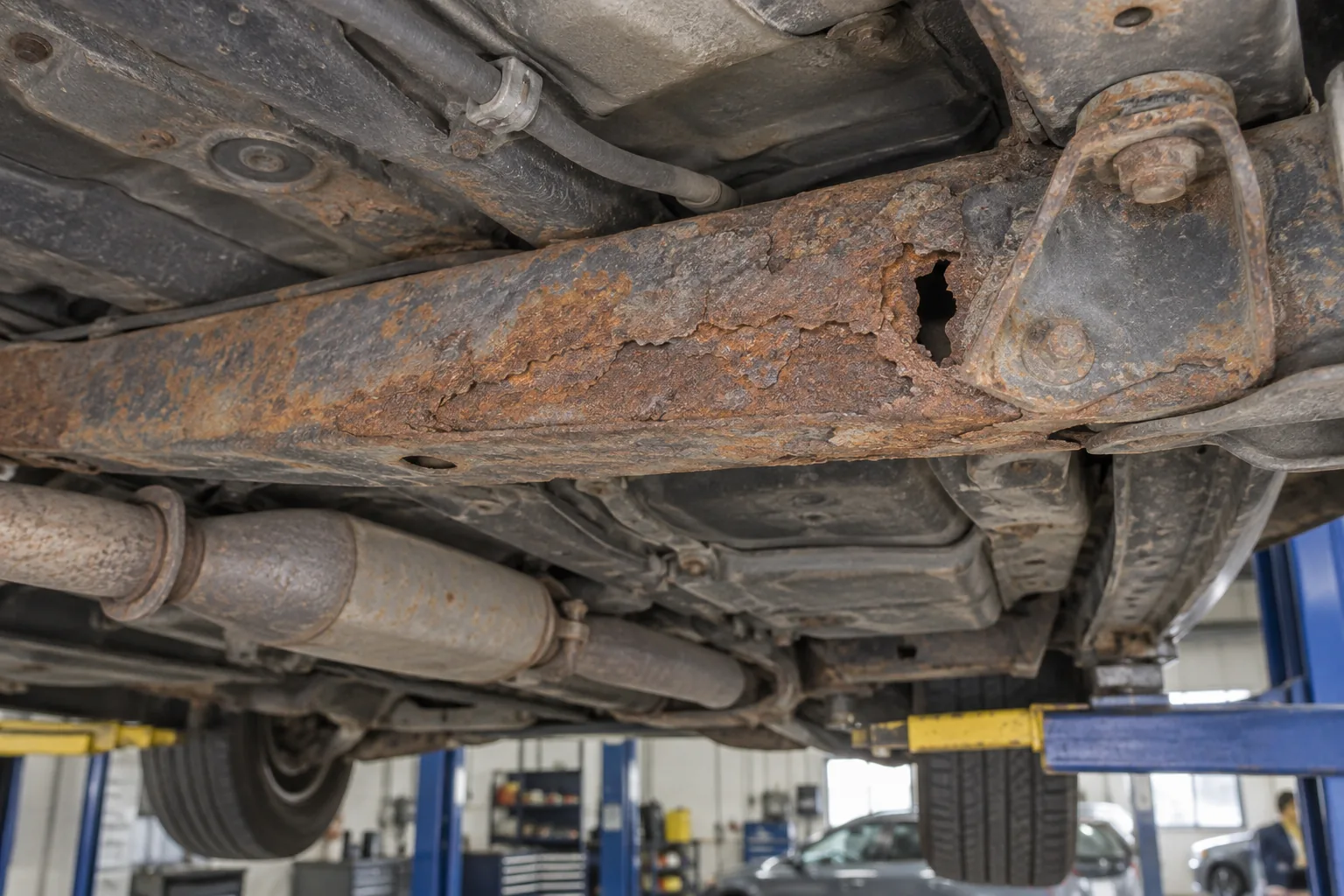
Not every problem is a deal-breaker. Worn brakes? Negotiate. Old tires? Budget for them. Minor cosmetic damage? Character.
But some findings should end the conversation immediately. These aren't negotiating points—they're warnings that you're about to buy someone else's nightmare.
Here are the five red flags that should make you walk away, no matter how good the deal seems.
1. Frame damage or structural repairs
The frame is the skeleton of the car. Once it's been bent, welded, or "repaired," the vehicle is structurally compromised forever. There's no such thing as a frame that's "as good as new."
Why it matters: Frame damage affects everything—alignment, handling, crash safety. A car with frame repairs will never drive right, wear components unevenly, and may not protect you in an accident the way it was designed to.
How inspectors find it: They look for weld marks, uneven panel gaps, misaligned body panels, and signs of structural work under the vehicle. Paint thickness meters can reveal hidden repairs. A trained eye catches what sellers hide.
The verdict: Walk away. There's no discount steep enough to compensate for compromised safety.
2. Flood or water damage history
Water and cars don't mix. When a vehicle has been submerged—even partially—water gets into everything: the electrical system, the computer modules, the wiring harnesses, the bearings, the interior structures.
Why it matters: Flood damage creates problems that appear weeks, months, or years later. Corrosion eats wiring from the inside. Mold grows in hidden spaces. Electrical gremlins pop up randomly. These problems are expensive, recurring, and often impossible to fully fix.
How inspectors find it: Musty odors, water stains in unusual places, corrosion on electrical connectors, silt or debris in hidden compartments, mismatched carpets or upholstery, and vehicle history reports that show flood titles.
The verdict: Absolute deal-breaker. Flood cars should be crushed, not resold.
3. Major drivetrain issues
The engine and transmission are the most expensive components in your car. When they fail, you're looking at bills that often exceed the vehicle's value.
Signs of trouble:
- Transmission slipping, shuddering, or delayed engagement
- Engine knocking, ticking, or unusual sounds under load
- Smoke from the exhaust (blue = oil burning, white = coolant leak)
- Significant oil leaks or evidence of recent gasket work
- Metal particles in fluid samples
Why it matters: A transmission rebuild runs $2,500-$5,000. Engine replacement is $4,000-$8,000+. These aren't repairs—they're events that redefine whether the car is worth owning.
The verdict: Unless the price reflects a major drivetrain repair in your immediate future, walk away.
Our inspectors check for all five of these red flags in every inspection. If we find any of them, our recommendation is clear: Walk Away.
You didn't come this far to buy someone else's disaster.
Get Your Inspection Report →4. Odometer tampering or title issues
Odometer fraud is more common than people think. Digital odometers are actually easier to roll back than mechanical ones, and the tools to do it are readily available online.
Warning signs:
- Wear patterns inconsistent with stated mileage (heavily worn pedals on a "low-mile" car)
- Service records or Carfax entries showing higher mileage in the past
- Title says "exempt" or "not actual" mileage
- Salvage, rebuilt, or branded title
- Multiple out-of-state title transfers
Why it matters: Tampered mileage means everything you think you know about the car is wrong. A "60,000-mile" car with 160,000 actual miles needs completely different maintenance and has a completely different remaining lifespan.
The verdict: Title problems follow cars forever. Don't let them follow you.
5. Seller refuses inspection
This one isn't about the car—it's about the transaction. When a seller refuses to allow an independent pre-purchase inspection, they're telling you something important.
Common excuses:
- "I already had it inspected" (by whom? for what?)
- "There's nothing wrong with it" (prove it)
- "I've got other buyers interested" (let them have it)
- "That's insulting" (no, that's due diligence)
Why it matters: Honest sellers welcome inspections. They know it builds buyer confidence and speeds up serious transactions. Resistance to inspection is either hiding something or a sign of such poor judgment that you should wonder what else they've neglected.
The verdict: No inspection, no sale. It's that simple.
The walk-away mindset
Here's the uncomfortable truth: walking away is hard. By the time you've found a car, arranged to see it, maybe traveled to look at it—you're emotionally invested. You want it to work out.
That's exactly when bad decisions get made.
The best thing you can do for yourself is decide before the inspection what your deal-breakers are. Write them down. Commit to them. When you know your walk-away points in advance, you won't talk yourself into a disaster in the moment.
And if you're not sure what should be on your list? That's what professional inspectors are for.
PrePurchase Pro inspections give you a clear recommendation: Buy, Negotiate, or Walk Away. Our ASE-certified inspectors know what problems matter and which ones don't. Let them be your guide.
Find the red flags before you sign
Our inspectors know exactly where problems hide. Get the truth before you buy.